

Translation: "(Spring)" and Three Other Poems by Hanna Riisager
Translated from the Swedish by Kristina Andersson Bicher.
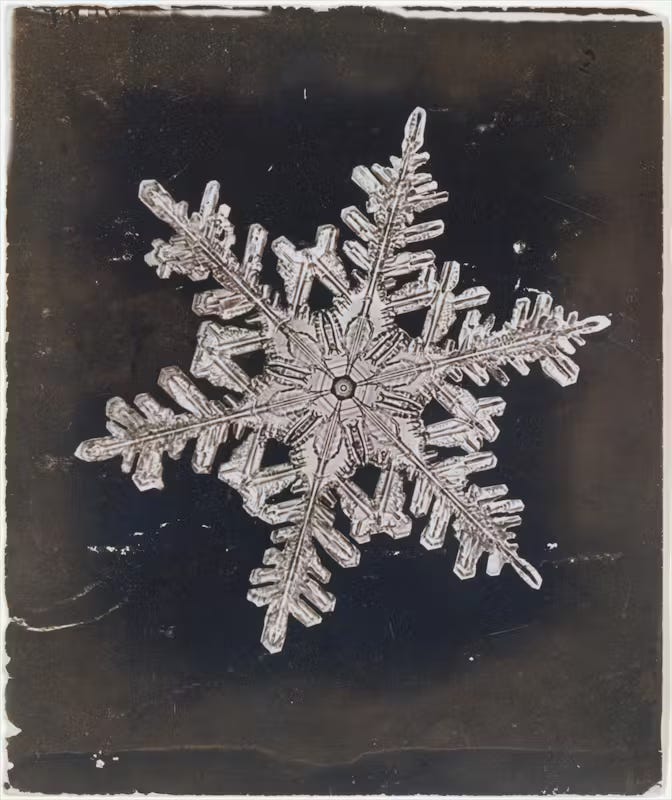
When Hanna Riisager’s debut collection För Kvalia was released in 2015, one reviewer in Sweden described it as “a distinctive collection of poems that taps into philosophical theories about perception…playful and straightforward…worth discovering for those who dare to see the world in other than black and white.” Svenska Dagbladet placed Riisager among Sweden's 20 most important young poets in 2016. A review in Jönköpings-Posten noted how “Riisager plays freely and self-consciously with all the tricks of modernism, crossed lines and morphemes scattered across the white page.”
This book in which these four poems appear is both exploration of and ode to qualia (as if she were a person). The Stanford Encyclopedia of Philosophy defines qualia as that concept which seeks to “establish that conscious experience involves non-physical properties. It rests on the idea that someone who has complete physical knowledge about another conscious being might yet lack knowledge about how it feels to have the experiences of that being.”
Riisager draws on Frank Jackson's philosophical thought experiment to prove the existence of qualia: the (so-called) Knowledge Argument. Jackson imagined a distinguished woman scientist, Mary, trapped in a black-and-white room. Mary specializes in the neurophysiology of vision, but she can't experience it. What will she learn when she sees the color red?
As a translator, these were thrilling poems to dig into. With only loose narrative threads, the poems are borne along on drifts and false trails of imagery and language which accumulate then waft away. Cohesion is fleeting, like a passing scent. Colors figure prominently. Word pile-ups alternate with buckets of white space. The book draws upon classical poetic traditions but also brings in commercial products from the beauty industry that employ language seeking to re-define the self.
(Spring)
Embedded in
snow-silence. In March’s last
winter. Not my theft.

It's a thick blanket, the traffic waves’
heavy flow.
There are a thousand fluttering cherubs
that loose themselves from the gray sail
and fly in shoals towards a light
absorptive sky.
Snow falls on the street.

An ice cream truck
bleeds. Traffic stops
at the red light.  It turns
silent.  Turns white.
(To Be)
Is bright. Light blue.
It is azure. She is so impatient.

		             It’s
going to
		             You
                          get used to it. She

hangs it around your neck, fastens
the silver chain. 	I
didn’t want to

It’s an ice-drop of glass, a
frozen river, spiral-shaped, twisted
time.

I'm healing.
Not bleeding. Scar of glass.

It's a gravelly spring day.
Windy. This white, almost white,
light light blue.
I do not need
                                             I
do not need that
(A grave)
It weighs eight kilos and speaks to me
from my breast.

I can't kill it because
it’s not like me.

It is white. Light blue. It talks
with an uncle's nonchalance,

a darker voice, hovering
hand movements.

The weight of this body in the bed
corsets me during the day.

I'm on the couch
in the corner.
(Were)
You –
Here –
Come out, be
grave.

Receive the inheritance, our parts,
kernels.
Your neck’s granular tissue.
Your star-shaped thick
crust
of grenades that will
continually heal.

Hair like a Venetian blind
when she bends forward to
snap the lock in your neck.
Angel. Emptied of crying. I guard you.
Your black silhouette, the azure-blue
light-from-night

No more mornings, no more
eye stones.

Hanna Riisager is a Swedish poet and critic living in Stockholm. She has an MA in literary studies from Stockholm University and is one of the founders of the feminist publishing house Dockhaveri förlag. Her first full-length poetry collection För Kvalia (2015) was short-listed for the Swedish Authors' Association debutante prize (Katapult prize) in 2016. Excerpts from För Kvalia have previously been translated into Romanian, French, and Greek. Poems translated into English have appeared in Asymptote, ANMLY, and Four Way Review, and are forthcoming in Plume and DIAGRAM.

Kristina Andersson Bicher is the author of Heat, Sob, Lily (MadHat Press, 2025), She-Giant in the Land of Here-We-Go-Again (MadHat Press 2020), and Just Now Alive (2014), as well as the translator of Swedish poet Marie Lundquist’s full-length collection I walk around gathering up my garden for the night (Bitter Oleander Press 2020). Her poetry appears in literary journals including AGNI, Ploughshares, Hayden’s Ferry, and Narrative. Her translations and nonfiction have appeared in The Atlantic, Brooklyn Rail, Harvard Review and others. She holds an MFA from Sarah Lawrence College.
So Far this August from The Fortnightly Review:
The Fortnightly Interview: On Curses and Failed Fairytales

Last June, Marcela Fuentes’s debut novel Malas was on a number of best novel lists as well as the Good Morning America Book Club pick for that month. And already this year Fuentes has won several awards, among them the Sergio Troncoso Texas Institute of Letters First Fiction Prize and the 2025 Western Heritage Literary Award.
"Bishop Auckland" and Two Other Poems by John Redmond

Bishop Auckland almost every week I think about how men think about the Roman Empire almost every day The Guardian confirms it’s a meme even today I am thinking about Vinovium state-of-the-art saunas of th…
The Fortnightly Review in Review: July 2025

This month’s installment of TFR in Review is later than usual, because as the photos show I’ve been to Norway, traveling with a group of Lake Forest College colleagues to attend a seminar on AI and the humanities hosted by the Center for Digital Narrative at the University of Bergen. The artists and writers associated with the Center are bullish on the …

Two Poems by Eliot Cardinaux

XXIV for Mireille Ganselmy beloved asks what is the valence of desire I ask you what is the valence of despair a leaf treeless wanhope if trees connote silence life force a bridge between them mended & rebuilt so many times like a ship of Theseus will the wounds come to you …
